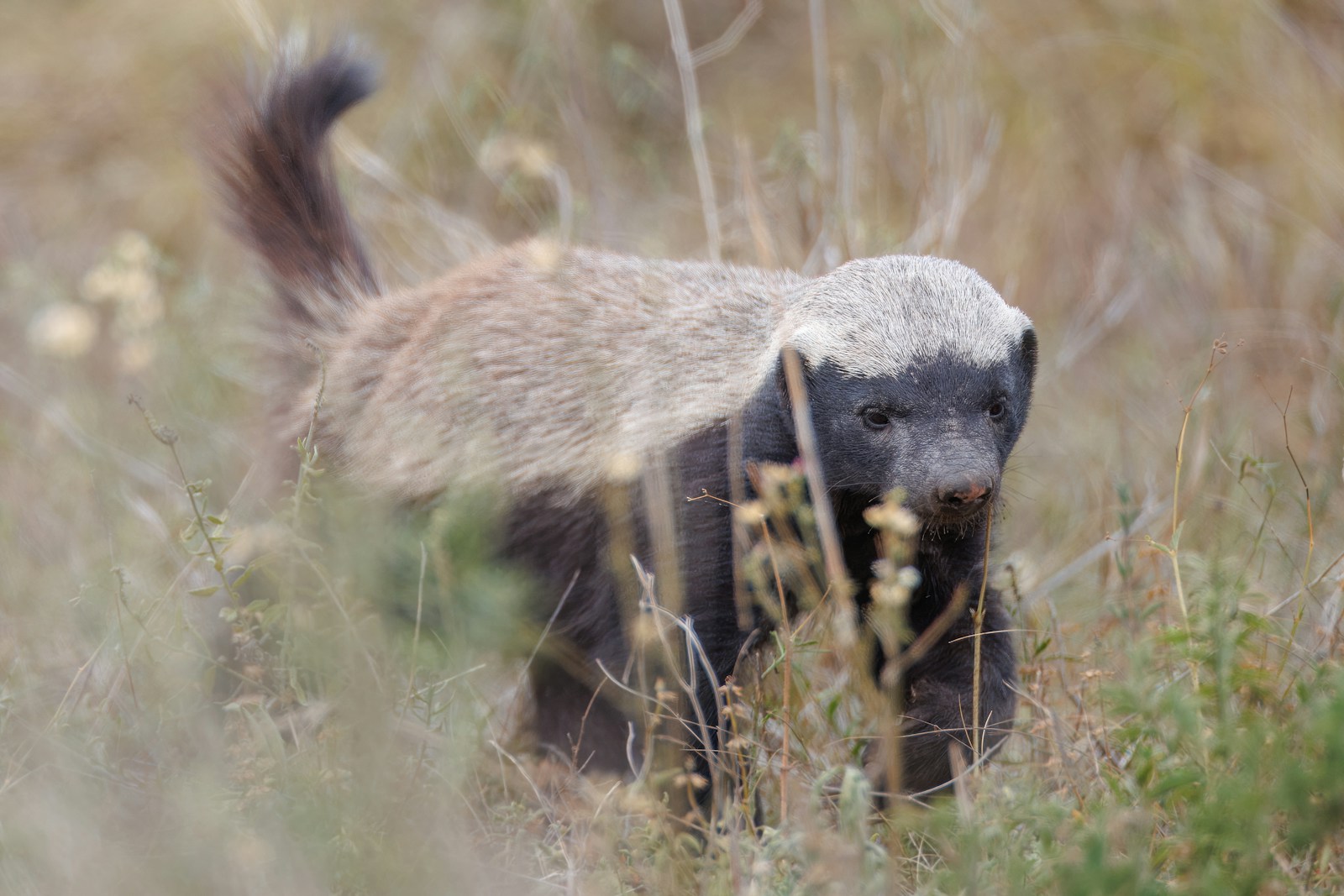
The Honey Badger of Africa: The Fearless Animal That Fights Off Lions
Deep in the grasslands and forests of Africa lives a small animal with a gigantic reputation. The honey badger weighs only about as much as a medium-sized dog, but it has been called the most fearless animal on Earth. This little creature has a superpower that helps it survive: it simply refuses to back down from anything, even lions and leopards.
Honey badgers have thick, loose skin that acts like armor. When a predator tries to bite them, the honey badger can twist and turn inside its own skin to fight back. Their skin is so tough that porcupine quills, bee stings, and even some snake bites cannot hurt them badly. This incredible defense system is like having a built-in shield.
These brave animals eat almost anything they can find, including venomous snakes, tough roots, and yes, even honey from bee hives. They use their strong claws to dig and climb, and their powerful jaws can crunch through bones. If a honey badger gets stung by hundreds of bees while raiding a hive, it might take a quick nap to recover and then go right back to eating.
Scientists think the honey badger's fearlessness comes from its confidence in its defenses. When you have tough skin, sharp claws, and the ability to release a stinky smell to confuse enemies, you can be pretty brave. This superpower of fearlessness helps the honey badger find food that other animals are too scared to go after.
The honey badger shows us that being brave doesn't mean being the biggest or strongest. Sometimes the best superpower is simply refusing to give up, having good defenses, and believing in yourself.